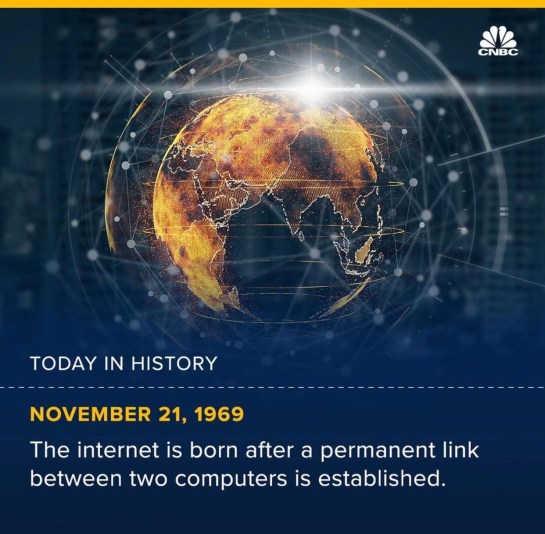
Happy birthday to the phenomena that has brought us all here today: the internet.
The internet has come a long way in the last 49 years, since its inception as a link between 2 computers. Now, billions of devices are linked together across the world.
The inventor of the World Wide Web, a collection of web pages that can be accessed via the internet, recently said the internet is broken.
HoverSurf
HoverSurf, a start-up tech company based in San Jose, California, has designed a flying machine called the Hoverbike that looks like a drone and an ATV—and they are taking deposits now. Read More
Jeff Bezos, Amazon Founder, entrepreneur and owner of the Washington Post, talks to David Rubenstein about his background, how he came up with the idea for Amazon, building the company, some of the key businesses including Prime and Whole Foods, the space race and philanthropy. The world’s richest man says his most important decisions are made not with quantitative analysis but “with instinct, intuition, taste, heart.”
Bill Gates reflects on six important moments from his life and career, from teaching students to program in high school to his relationships with Melinda Gates, Warren Buffett, and Paul Allen, co-founder of Microsoft, who passed away on October 15.
Last year, Shepard Fairey launched his largest solo exhibition in Los Angeles entitled “DAMAGED.” Now, the iconic visual artist teamed up with VRt Ventures to launch a virtual reality meets augmented reality experience on all mobile devices. Read More
During an event at SpaceX headquarters on Sept. 17, 2018, SpaceX CEO Elon Musk and Japanese entrepreneur Yusaku Maezawa playfully discuss the prospect of flying together on SpaceX’s mission around the moon, which could happen as early as 2023. Maezawa has bought all the seats aboard a SpaceX BFR vehicle for the trip and plans to bring six to eight artists along with him; he has asked Musk to come as well.
Bastian Lehmann, CEO and founder of delivery app Postmates
Delivery and logistics startup Postmates has raised $80 million at a valuation north of $400 million, the company announced Thursday.
The new round of funding, led by Tiger Global Management, will be used to expand into deliveries beyond just food, and to introduce a new service that charges customers $1 each for deliveries at peak hours, CEO Bastian Lehmann tells The Wall Street Journal.
Previously, the company raised $58 million from investors including Spark Capital, AngelPad, and SoftTech VC.
Postmates is part of a competitive group of on-demand delivery services. One of its New York-based competitors, WunWun, sold to startup Alfred earlier this month. But one thing that makes Postmates stand out is its dedication to delivering goods in under an hour. Another is its partnerships with high-profile companies.
Postmates is growing like crazy: it took 116 weeks for the startup to reach 500,000 cumulative deliveries in the US, but it only took 20 weeks to achieve the next 500,000 deliveries, and just 10 more weeks for the next 500,000. Some of its markets are individually profitable, Lehmann told the Journal, but the company as a whole is not.
With the news of the new infusion of capital, Postmates also revealed some new stats: the company has completed 2.8 million deliveries across 28 markets; its gross profit is on track to grow by more than 10x in 2015, compared to last year; and the company now has 13,000 Postmates doing deliveries.
Tidal, the high-definition music streaming service acquired by rapper and music mogul Jay-Z, is gearing up for its official relaunch under new ownership today, and it will be doing so by reportedly making a move to snag new releases by some of the biggest musicians of the moment including Kanye West, Madonna and Daft Punk, ahead of rival services like Spotify and Beats.
The company has been sending out invites for a press conference being held at 5pm Eastern time today, in which Shawn “Jay-Z” Carter “will announce a commitment to a new direction for the music industry from both a creative and business perspective.” While there is not much detail being provided officially, unofficially we’ve heard that the company will be using the event to confirm the first big-name artists to stream music exclusively on the Tidal platform.
What might those artists be doing on Tidal? Not an ordinary streaming deal, it seems. Over the weekend, the Swedish blog Breakit reported — citing sources close to the deal — that Tidal’s plan of attack will be to ink first-window deals with the artists, where Tidal would get first releases of tracks from big-name artists ahead of any other digital streaming services. This would be exclusive, but only for a period: Spotify, Deezer and others would eventually also get these tracks, but only later.
It would also follow on the heels of Taylor Swift’s catalog coming to Tidal last week — minus her 1989 album. This is not an exclusive deal but lays the groundwork for other Swift music to make its way to Tidal first.
What’s the pull for these artists? It’s partly the Jay-Z connection. His Roc Nation agency works with a long list of musicians to provide publishing, management, label and other services, with Tidal becoming yet another string on Roc Nation’s bow as a one-stop music distribution shop.
On the other hand, from what we understand, Tidal is also offering a more attractive set of terms to musicians than other streaming services — often agreeing to payouts of twice as much as its rivals.
With many artists complaining that digital music is not providing decent enough returns, the later of these could be a deal maker for Tidal. The big question is whether artists are willing to make the bet on payouts-per-stream over that of visibility: right now Tidal has only 35,000 subscribers paying $19.99 per month across the markets in which it is active, which include the U.S. and UK. By comparison, Spotify noted 15 million paying subscribers in January of this year. Tidal also offers a standard definition service at $9.99.
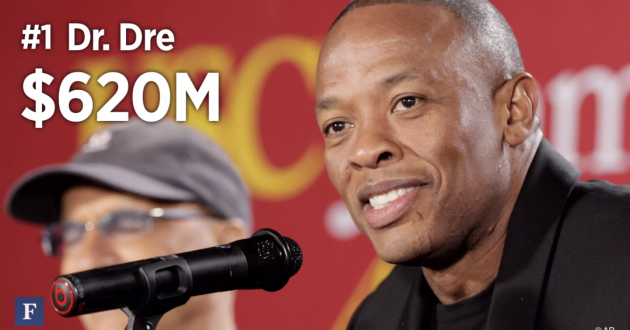
Jimmy Iovine and Dr. Dre may have built a $3.2 billion empire on a product that cost less than $20 bucks to create.
The New York Times reports that Dr. Dre’s Beats by Dre headphones are inexpensive to make, with headphone designers estimating “the cost of making a fancy headset is as low as $14.” A pair of Beats by Dre can cost upwards of $450.
While Beats by Dre may be made for cheap and have questionable sound quality, the brand is a marketing juggernaut. Beats by Dre owns an 27% of a headphone industry that reported $1.8 billion in sales last year.
Google has entered into an agreement to acquire Nest, the business behind the smart thermostat and smoke detector, for $3.2 billion in cash.
Nest was founded by Tony Fadell, a former Apple employee who is credited with being the brains behind the iPod, in 2010. Fadell will continue to run Nest and the company will operate as a standalone brand under Google.



 GWOP MAGAZINE