The End of the Album Rollout: Why Musicians No Longer Need Traditional Release Campaigns
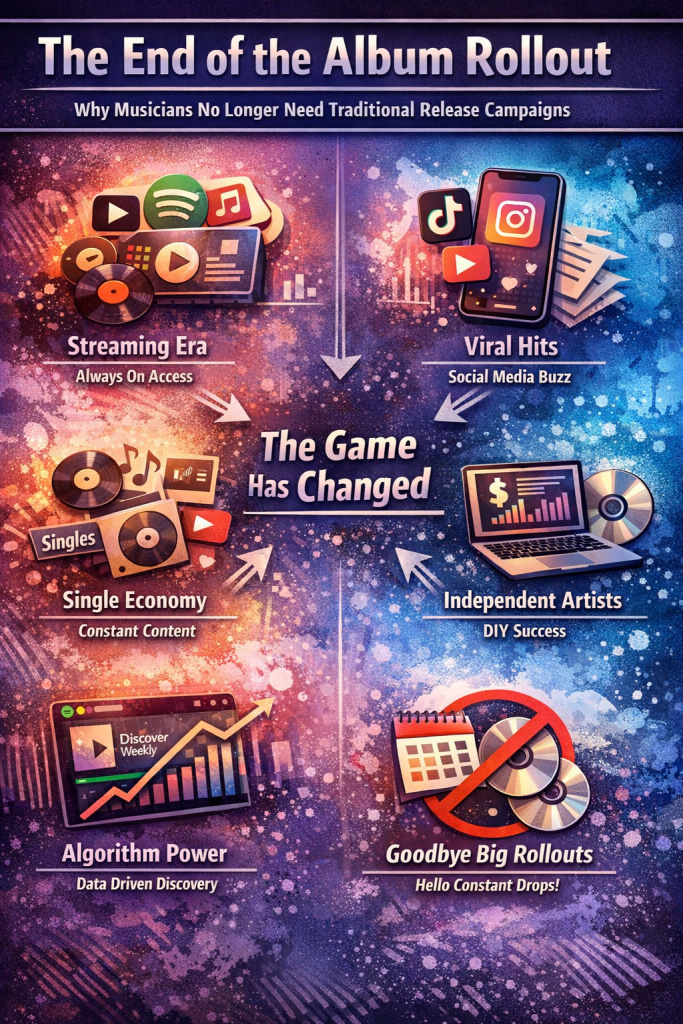
For decades, the music industry revolved around the carefully orchestrated album rollout. Labels spent months planning promotional campaigns—releasing lead singles to radio, scheduling interviews, premiering music videos on television networks, and organizing press tours. These rollouts were designed to build anticipation and concentrate public attention around the album release date. However, in the modern digital ecosystem, album rollouts have become far less important to a musician’s success. The shift toward streaming platforms, algorithm-driven discovery, social media virality, and creator independence has fundamentally transformed how audiences find and consume music.
The Streaming Era Eliminated the “Release Window”
In the past, music consumption was tied to physical sales and tightly controlled release schedules. Consumers had to buy CDs, vinyl, or digital downloads during a specific promotional window. This made the rollout critical because artists needed to maximize attention during the first week of sales.
Today, streaming platforms such as Spotify, Apple Music, and YouTube have eliminated the urgency of a release window. Songs remain permanently accessible and can gain traction months or even years after release. A track can go viral long after its initial launch, meaning the timing of a promotional rollout matters far less than the algorithmic visibility of the song itself.
Because of this, artists increasingly release music with minimal promotion, allowing streaming algorithms and listener behavior to determine a song’s success.
Viral Discovery Replaced Traditional Promotion
Social media platforms have become the new marketing engine for music discovery. Platforms like TikTok and Instagram frequently propel obscure songs into global hits overnight. A 15-second clip used in a viral video can generate millions of streams without any formal marketing strategy.
This phenomenon means that success often depends less on carefully planned album rollouts and more on organic internet momentum. Songs can explode in popularity because they fit a meme, dance trend, or cultural moment rather than because of a label’s promotional calendar.
As a result, musicians often prioritize releasing consistent singles rather than building toward a single album event.
The Rise of the “Single Economy”
The streaming era rewards frequency rather than scarcity. Algorithms on platforms like Spotify favor artists who release music consistently because each release gives the algorithm another opportunity to recommend the artist to listeners.
Historically, musicians spent two to three years crafting an album before releasing it through a large promotional rollout. Today, that strategy risks losing audience attention. Listeners have short attention spans and an endless supply of music available instantly.
Many successful artists now release:
frequent singles EPs instead of full albums deluxe versions of existing projects constant collaborations
This continuous output keeps artists visible in playlists and recommendation systems without the need for a major rollout campaign.
Artists No Longer Depend on Record Labels
Another factor reducing the importance of album rollouts is the growing independence of musicians. Digital distribution platforms such as DistroKid and TuneCore allow artists to upload music directly to streaming services without label involvement.
Traditional rollouts were expensive operations involving radio promotion, physical distribution, publicists, and marketing teams. Independent artists often lack the budget for such campaigns, yet many still achieve success through digital engagement and community building.
In other words, audience connection has replaced industry infrastructure.
The Algorithm Is the New A&R Department
Modern music discovery is increasingly controlled by recommendation algorithms rather than radio programmers or label executives. Platforms such as Spotify curate personalized playlists like Discover Weekly and Release Radar that introduce listeners to new music automatically.
These algorithms prioritize engagement metrics—such as saves, shares, and repeat listens—over traditional promotional buzz. As a result, a song that performs well with listeners will continue to be promoted by the platform regardless of its initial rollout strategy.
This creates a system where data-driven performance matters more than marketing hype.
Albums Still Matter for Culture—But Not for Success
While the traditional rollout may be losing importance, albums themselves still hold cultural significance. Albums allow artists to present cohesive narratives, explore themes, and build artistic identity. However, commercial success in today’s music economy does not necessarily depend on an album campaign.
Many artists achieve mainstream visibility through a single viral track before releasing a full project later. In some cases, the album simply compiles previously released singles that have already accumulated millions of streams.
Conclusion
The decline of traditional album rollouts reflects a broader transformation in the music industry. Streaming platforms, social media virality, algorithmic discovery, and independent distribution have decentralized the pathways to success. Instead of relying on a carefully timed promotional campaign, musicians now succeed through constant content creation, audience engagement, and digital momentum.
In this environment, the most valuable asset is no longer a meticulously planned rollout—it is the ability to capture attention repeatedly in a rapidly moving online culture.
For modern musicians, success is not determined by the launch of an album, but by the ongoing conversation between the artist, the algorithm, and the audience.
Sign up for Distrokid to release your new music:
 GWOP MAGAZINE