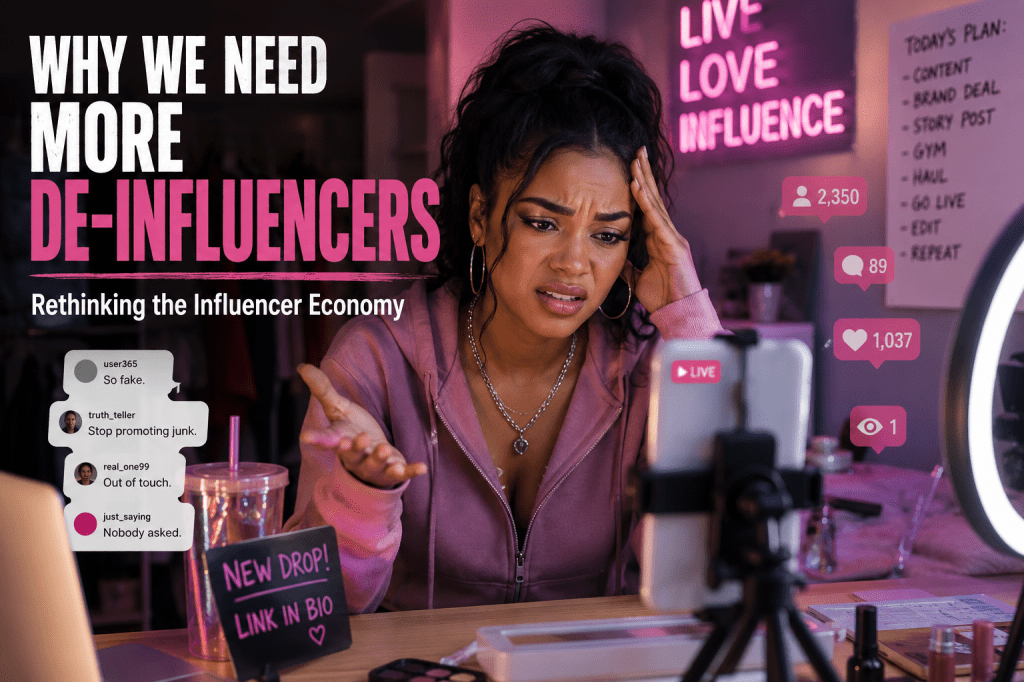
For over a decade, social media has promoted a simple narrative: anyone can become an influencer. Millions of people have been encouraged to transform their lives into content, their personalities into brands, and their daily experiences into products for consumption. While this movement has democratized media in important ways, it has also produced an economy built on comparison, constant performance, and increasingly unrealistic expectations.
A new cultural force has begun to emerge in response: the de-influencer. Rather than persuading audiences to buy more, chase trends, or imitate curated lifestyles, de-influencers encourage skepticism, intentional consumption, and critical thinking. Their rise may represent one of the healthiest developments in the digital age.
The question is no longer whether influencing has changed society. The more important question is whether society now needs more people willing to challenge influencer culture itself.
Read More