How to Use AI for Free: Why Most AI Subscriptions Are a Waste of Money
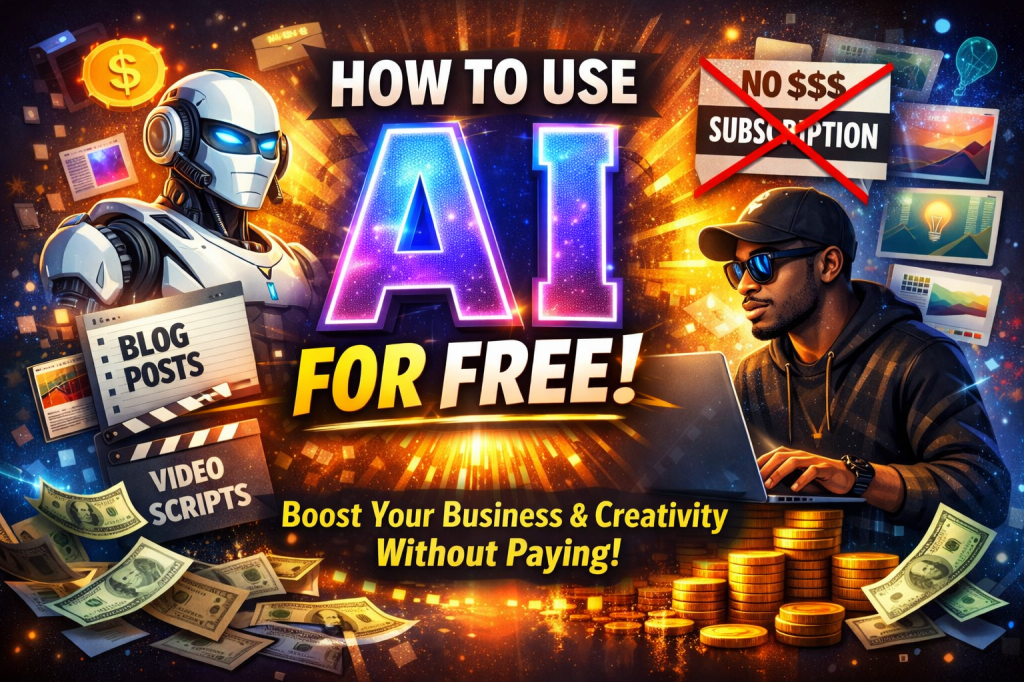
A Practical Guide for Creators, Entrepreneurs, and Independent Media
Artificial intelligence has become one of the most powerful tools on the internet. From writing articles to generating images and researching complex topics, AI platforms are transforming how people work. Companies like OpenAI, Google, and Microsoft have introduced AI assistants such as ChatGPT, Gemini, and Microsoft Copilot that promise to revolutionize productivity.
However, a new trend has emerged alongside this technological progress: AI subscription culture. Many companies aggressively promote paid tiers—often ranging from $10 to $30 per month—suggesting that users need premium access to fully benefit from artificial intelligence.
In reality, most people can accomplish nearly everything they need using free AI accounts.
For entrepreneurs, journalists, artists, and creators building independent platforms like GWOP Magazine, understanding how to maximize free AI tools can eliminate unnecessary costs while maintaining high productivity.
This guide explains how to use AI for free effectively—and why subscriptions are often overrated and all hype.
Why Free AI Tools Are More Powerful Than Most People Realize
The free versions of modern AI tools already provide an impressive set of capabilities. With a standard account on platforms like ChatGPT or Gemini, users can:
Write blog posts and essays Generate business ideas Summarize research papers Create marketing content Draft scripts and creative stories Generate image prompts Analyze information and data Brainstorm product concepts
These features cover the core functions that most users actually need.
Paid subscriptions usually offer improvements such as faster response speeds, larger input limits, or early access to experimental features. While these enhancements can be useful for large organizations or developers, they rarely change what AI can fundamentally accomplish.
In other words, the free version already does the real work.
The Real Skill: Prompt Engineering
The biggest factor determining AI output quality is not whether a user has a premium subscription. It is how well they communicate with the AI.
This process is known as prompt engineering.
A strong prompt clearly defines the role, task, and desired format of the output.
For example:
Instead of asking:
“Write an article about artificial intelligence.”
A stronger prompt would be:
“Write a 1,200-word SEO article explaining how entrepreneurs can use free AI tools to build online businesses. Use a professional tone and clear headings.”
The second prompt provides structure, context, and intent. As a result, even free AI systems can produce highly professional results.
For writers, journalists, and digital publishers, learning prompt engineering is far more valuable than paying for premium AI tiers.
The Power of Combining Multiple Free AI Tools
Another strategy that many users overlook is AI tool stacking—using several free platforms together.
Each system has slightly different strengths.
For example:
Research Stage
Use Gemini to explore topics and gather information from the web.
Writing Stage
Use ChatGPT to draft articles, scripts, or marketing content.
Productivity Stage
Use Microsoft Copilot to refine documents, emails, or presentations.
By combining these tools, users can replicate the capabilities often marketed as “premium features.”
This approach turns free AI into a complete creative and research workflow.
The Psychology Behind AI Subscriptions
The AI industry has adopted a marketing strategy similar to many software platforms: the freemium model.
Users are given free access to basic tools while premium plans are branded with terms like:
Pro Plus Advanced Premium
These labels create the impression that paid versions are dramatically more powerful.
However, the differences are usually incremental. Paid plans generally provide higher usage limits, not radically superior intelligence.
For casual users, writers, students, and entrepreneurs, free plans rarely create meaningful restrictions.
The real limitation is often lack of strategy or creativity, not lack of subscription access.
When Paying for AI Actually Makes Sense
While most individuals can rely on free AI tools, there are situations where subscriptions are justified.
These include:
High-volume professional content production
Media companies generating hundreds or thousands of articles.
Software development workflows
Developers analyzing large codebases or building AI-powered applications.
Enterprise automation
Businesses integrating AI directly into customer service systems or internal operations.
Outside these scenarios, the productivity difference between free and paid AI is often minimal.
How Independent Creators Can Use Free AI to Build Media Platforms
For independent publishers and creators, free AI tools represent an extraordinary opportunity.
A single creator can now perform tasks that once required entire teams.
With free AI tools, digital media platforms can produce:
SEO blog articles YouTube scripts social media content research summaries visual design concepts marketing copy
For independent outlets like GWOP Magazine, this means the cost of launching and scaling a digital publication has never been lower.
Artificial intelligence has effectively democratized content production.
The competitive advantage no longer belongs solely to large media corporations. It now belongs to creators who understand how to leverage AI strategically.
The Future of AI Access
Artificial intelligence is still evolving rapidly, but one trend is clear: competition among technology companies is driving more free access to powerful tools.
As platforms like ChatGPT, Gemini, and Microsoft Copilot continue to compete for users, the capabilities available on free plans will likely continue to expand.
For creators, entrepreneurs, and independent journalists, this means one thing:
Learning how to use AI effectively matters far more than paying for it.
Final Thoughts
The belief that AI productivity requires expensive subscriptions is largely a misconception fueled by marketing. In practice, free AI tools already provide the core capabilities needed for writing, research, creative development, and business planning.
Success with AI depends less on the platform and more on how intelligently the tools are used.
For independent creators and digital publishers, the real opportunity lies in mastering AI workflows—not in paying for premium plans.
In the modern internet economy, knowledge, creativity, and strategy remain the true advantages.
 GWOP MAGAZINE