Modern life has turned millions of people into passive consumers. Endless scrolling, binge watching, short-form dopamine hits, and algorithm addiction are slowly replacing deep thinking, creativity, and real-world skills.
The brain works like a muscle. If you don’t challenge it, it weakens.
In the digital age, we’ve long treated social media as an immortal force—a constant hum in the background of our lives, shaping opinions, sparking revolutions, and occasionally ruining reputations. But as we sit here in early 2026, the cracks are impossible to ignore. Usage is plateauing, engagement is waning, and users are fleeing in droves for quieter, more intentional corners of the internet. Social media isn’t just evolving; it’s dying a slow, algorithmic death. And at the epicenter of this collapse is X, the platform formerly known as Twitter, which we predict will be functionally irrelevant—or outright defunct—within the next few years. This isn’t hyperbole; it’s a culmination of fatigue, mismanagement, and a cultural shift away from the endless scroll.
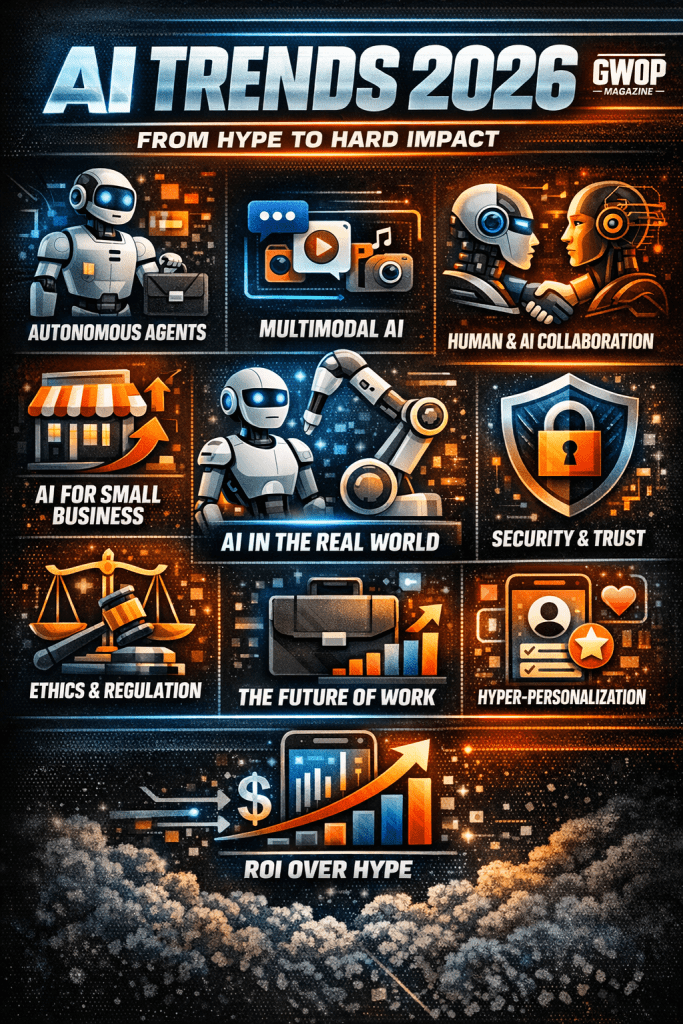
Here’s a Gwop Magazine–style deep dive into the AI trends and predictions shaping 2026 — the year artificial intelligence stops being an experiment and starts defining the future of business, work, culture, and everyday life.
Artificial intelligence is no longer just about flashy demos and viral chatbots — 2026 is the year AI becomes embedded, indispensable, and transformative across industries and our daily routines. The focus has shifted from novelty to productivity, integration, and real-world return on investment.
Welcome to the new wave of hustle — where your creativity meets artificial intelligence, and your laptop becomes the plug.
In 2025, AI isn’t just for tech heads or coders — it’s the new money printer for creators, artists, and entrepreneurs who know how to use it. From ChatGPT to Sora to Midjourney, these tools are helping people turn ideas into income faster than ever.
Artificial Intelligence isn’t science fiction anymore—it’s here, it’s learning fast, and it’s already changing the job market. By 2030, AI will have automated millions of tasks across industries, reshaping the way we work and live. Some jobs will disappear, some will transform, and new ones will rise out of the digital dust.
Here’s a breakdown of the jobs most at risk of being replaced by AI in the next few years:
Yo, 2025 is moving fast’, and it’s time to stop scrollin’ and start creatin’. Art ain’t just paint on a canvas or some dusty museum piece—it’s you spittin’ bars in a freestyle, droppin’ a YouTube vlog that slaps, streaming or penning poetry that hits the soul. Art is anything you birth from your mind, your hustle, your heart. And this year? It’s the year everybody needs to get in the game. Here’s why, GWOP style.
In a world obsessed with productivity and financial freedom, side hustle culture has become a badge of honor. From driving for rideshare apps to launching Etsy shops or freelancing on weekends, millions are jumping into secondary gigs to boost income or chase passions. But beneath the allure of extra cash and entrepreneurial swagger lies a less glamorous reality. The grind of side hustle culture can take a toll on your mental health, physical well-being, relationships, and even your career. Let’s unpack the negative effects and why the hustle might not always be worth it.
The workplace of 2025 isn’t your parents’ 9-to-5. Artificial intelligence has flipped the script, automating tasks, reshaping industries, and forcing us to rethink what “work” means. From creators building empires from their phones to coders collaborating with AI tools like vizcom ai, chat gpt, and replit, the future of work is here—and it’s equal parts opportunity and disruption. So, how do you not just survive but thrive in a post-AI world? Let’s dive into what’s changing and how to secure your bag in this new era.
Success used to mean a corner office, a fat paycheck, and a fancy title. But in 2025, the digital age has flipped the script. Gen Z and Millennials are rewriting the rules, prioritizing freedom, impact, and flexibility over the traditional 9-to-5 grind. Financial freedom—having enough income to live life on your terms—has become the ultimate flex. But what does success look like in this hyper-connected, AI-driven world, and how do you achieve the kind of wealth that buys you time, not just material things? Let’s break it down.
Success in 2025: It’s Not About the Bag, It’s About the Life
For years, hustle culture has been the heartbeat of urban life. From the grind of aspiring rappers spitting bars in basement studios to streetwear designers sketching late into the night, the mantra was clear: work hard, sleep later, and stack that gwop. But as we move deeper into 2025, there’s a shift in the air. The relentless grind is losing its shine, and a new vibe is taking over—one that values balance, mental health, and redefining what it means to “make it.” Hustle culture, as we know it, might just be on its way out.